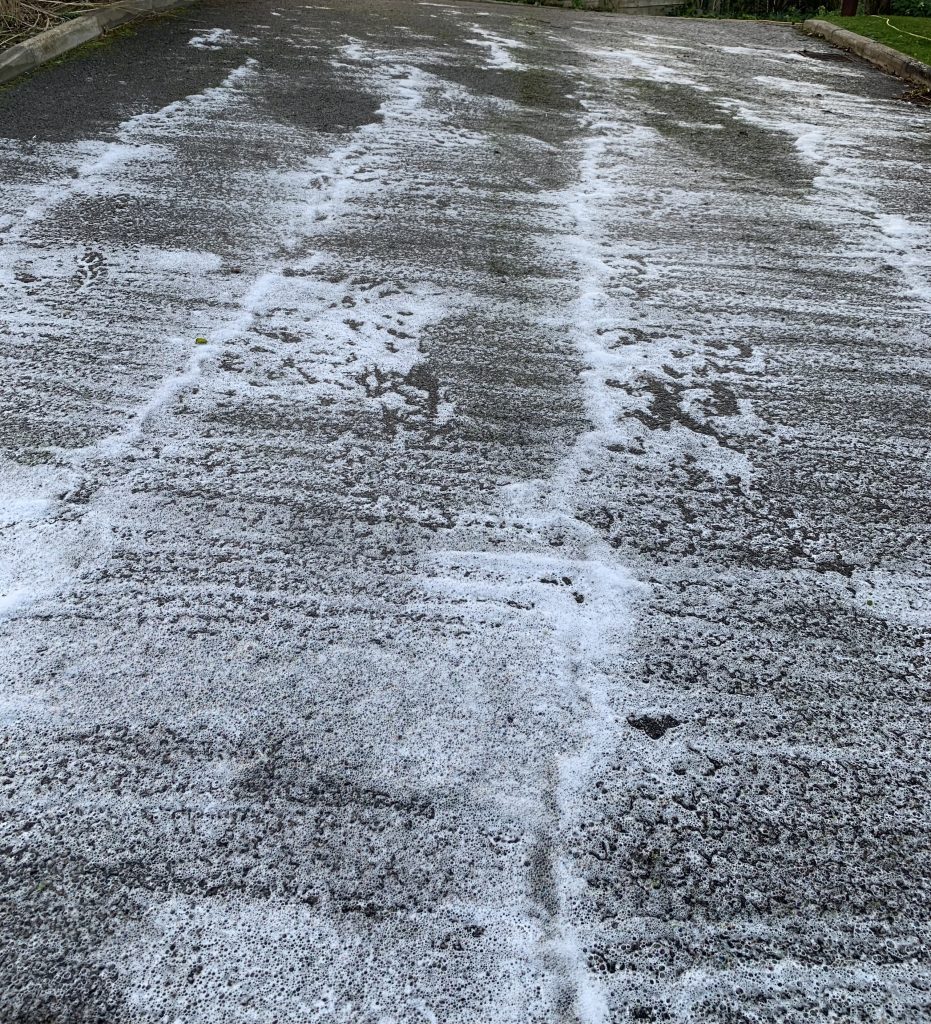
Tarmac (also known as tarmacadam or asphalt) is widely used for driveways, paths and car parks. While it’s durable and cost-effective, the British climate creates ideal conditions for algae, moss and lichen to thrive on its surface. A professional biocide treatment is one of the most effective ways to remove and prevent this growth.
Why Tarmac Needs Biocide Treatment

n damp, shaded areas, you may notice:
- Green algae staining
- Moss growth in porous areas
- Black or white lichen spots
- Slippery surfaces in wet weather
Aside from looking unsightly, biological growth can become hazardous, especially during autumn and winter. Moss retains moisture, which may accelerate surface deterioration over time.
What Is a Biocide Treatment?
A biocide treatment involves applying a specialist cleaning solution designed to kill organic growth at its root. Unlike simple pressure washing, which removes surface debris, biocides:
- Kill spores and roots
- Prevent regrowth for months (sometimes longer)
- Continue working after application
- Reduce the need for frequent cleaning
Most professional-grade biocides used in the UK are biodegradable once dry and safe when applied correctly.
The Correct Process for Treating Tarmac
1. Inspection
Check for oil stains, cracks or loose areas. Tarmac is softer than concrete and can be damaged by aggressive cleaning.
2. Pre-Clean (If Required)


Heavy moss may need gentle removal first. If pressure washing is used:
- Keep pressure low
- Use a wide fan nozzle
- Avoid close-range blasting
- Do not use a turbo nozzle on tarmac
3. Biocide Application
The solution is typically applied via:
- Low-pressure sprayer
- Soft wash system
- Watering can (for small areas)
The surface should be dry or only slightly damp. The treatment is left to dwell and is not usually rinsed off.
4. Natural Weathering
Over the following days or weeks, dead organic matter breaks down and washes away naturally with rainfall.
How Often Should Tarmac Be Treated?
In most environments:
- Every 12–24 months is typical
- Shaded or north-facing areas may require annual treatment
- Heavily tree-covered areas may need more frequent maintenance
Preventative treatment is often more effective (and cheaper) than waiting until growth becomes heavy.
Benefits of Biocide Treatment
- Improves appearance
- Reduces slip risk
- Slows regrowth of moss and algae
- Extends lifespan of the surface
- Reduces need for aggressive pressure washing
Important Considerations
- Avoid applying before heavy rain (unless product states otherwise).
- Keep pets and children off the surface until fully dry.
- Never mix different chemicals.
- Check local regulations if treating large commercial areas.
Final Thoughts
Biocide treatment is a safe and effective way to maintain tarmac surfaces. When applied correctly, it keeps driveways and paths cleaner for longer and reduces the risk of slips caused by algae and moss. If your tarmac is beginning to look green or patchy, early treatment will restore its appearance and protect it for the seasons ahead.